One Bad Morning Isn't a Trend: What 2,000 Days of Oura Data Taught Me
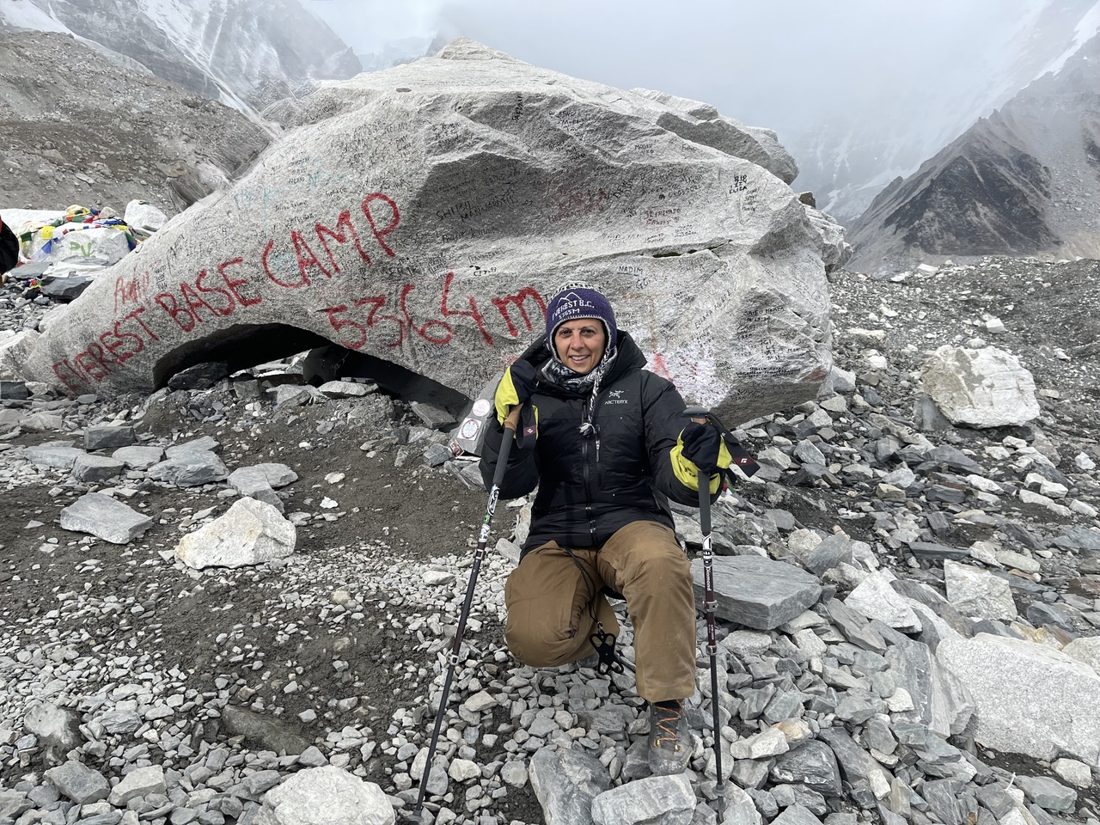
At Everest Base Camp.
A few months into training for my first Everest Base Camp trek, I woke up to an ugly recovery score. My Oura ring was practically begging me to take a rest day. The problem was, I felt fine. So I did my scheduled workouts anyway.
That morning's number wasn't necessarily wrong. It just wasn't the whole story. And treating every daily reading as if it were the whole story is a good way to lose sight of what actually matters: the trend.
Think about body composition. If you wanted a perfectly accurate measurement, you'd need methods far more involved than anything you're going to do before breakfast. So most of us settle for tools that are less precise but repeatable enough to show whether things are moving in the right direction.
I now have close to 2,000 days of data from my Oura ring. Any one morning's reading might be a little off. That's true of wearables, scales, and just about every other consumer tracking device. But thousands of imperfect measurements can still tell you something valuable.
Over time, I can see how my sleep, stress, and recovery respond to training load, travel, poor nights, hard weeks, and easier ones. I rarely make a decision based on one data point. I look at the shape of the last few weeks and ask what it's telling me.
That's also one of the most important lessons in long-horizon training for something like Everest Base Camp: consistency matters more than perfection. You don't prepare for a multi-week trek by getting every training day right. You prepare by doing enough good work, consistently enough, for long enough that an occasional missed workout, bad night, or ugly recovery score becomes a small part of a much larger pattern.
The danger is overreacting to the daily number
One bad recovery score doesn't automatically mean you need to abandon the day's training. One good score doesn't mean you should ignore fatigue either. The number is one input. How you feel, what you've been doing, and what the previous few weeks look like matter too.
If you're early in training and your data isn't cooperating, or you missed a workout, slept badly, or watched your recovery score tank during a stressful week, don't mistake one bad reading for a bad trajectory.
A better question:
Does this month look better than last month?
Asked patiently and repeatedly, that question will tell you far more than any single morning's score. You don't need perfect data to get ready for Base Camp.
You need a trend you can trust.
This is the same rule the Veda Health Terminal runs on. It doesn't react to one morning. A number gets flagged when it sits outside your own baseline for several days running, not when it dips once, and that baseline is built from your history, not anyone else's.
One ugly score is noise. Three in a row is a signal, and telling the two apart is most of the job. AnnMarie's instinct to train through a single bad reading was the right one, though if the same warning had shown up three mornings straight, that's when you pull the load back.

AnnMarie Castrigno trained eleven months for Everest Base Camp and has close to 2,000 days of Oura ring data. She writes here as a guest of Expedition Ready. Read her earlier pieces, Working Out vs Training and When the Objective Clouds the View. Find her on Instagram at @acastrigno.
What does your trend say?
Two minutes, a few questions, and an honest read on the gap between you and your next big chapter.
Get your Expedition-Ready Score