The Method Field Notes Get your score

Expedition Ready

Get expedition ready. Then stay that way.

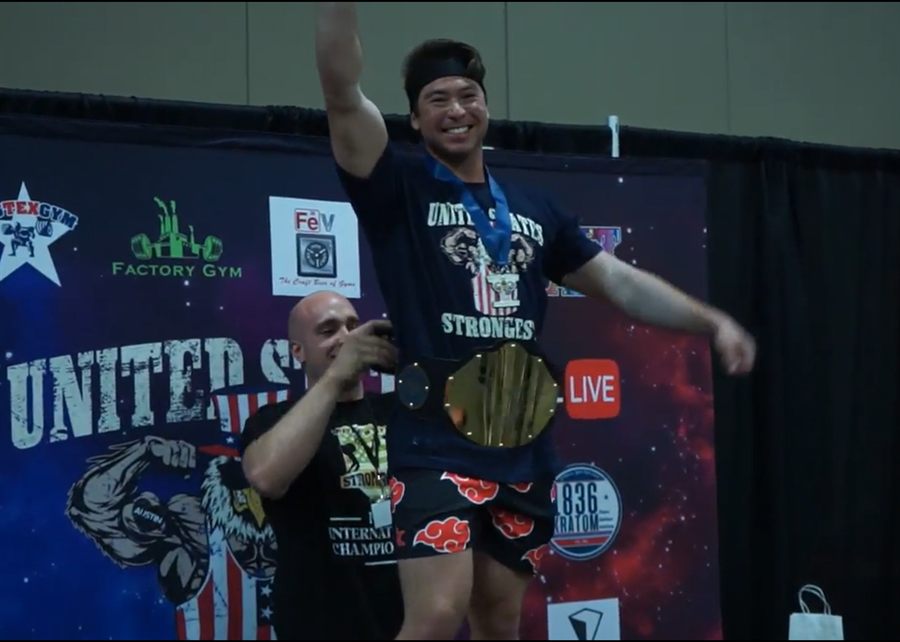
Hawaii's Strongest Man · Champion Austin Fit Expo Strongman · Champion LA's Strongest Man · Podium Military Intelligence · Veteran Everest Base Camp · Boots on the ground
The three pillars

Why we call it the Everest Circle.

One trip is an event, though what actually changes a life is the loop. Preparation earns the mountain, the mountain gets guided and filmed, and what you carry home becomes the reason there's a next one. Three pillars, and the third one feeds the first.

Pillar One

Preparation

Months before Lukla we build the engine the trek actually asks for, adjusted every week from your own wearable and blood data. You fly out trained instead of hopeful, and you know which one it is because the numbers say so.

Pillar Two

Shooting and guiding

On the mountain I'm two things at once. Your coach on the trail, pacing you and reading how you're holding up, and the guy flying the drone. Himalayan Leaders has handled the ground since 1989, I handle you and the footage.

Pillar Three

The next adventure

You come home with a film and a body that just walked to Base Camp. Most trips waste that. We spend it, picking the next objective while the fitness is still in your legs, which is exactly where the circle starts over.

Fit check

Built for a specific kind of person.

This is for you if

  • You are in your 40s or 50s with a real adventure on the list: EBC, the Dolomites, Kilimanjaro, a serious dive trip
  • You look at a flight of stairs, or down at your gut, and hear a nagging doubt
  • You will wear a tracker, log your training, and share the data
  • You can commit 4 to 5 hours of training a week
  • You want a coach who adjusts your plan from evidence, weekly

This is not for you if

  • You want a 30-day hack or a supplement stack instead of training
  • You will not wear a device or log sessions, there is nothing to coach from
  • You have a medical condition your physician has not cleared for training, we wait for the green light first
  • You are shopping for the cheapest option, this is deliberately not that
No new gear

The Health Terminal reads what you already wear.

Most coaches sell you a new gadget. I'd rather read the one already on your wrist. Your Whoop, your Oura, your watch, your labs, it all feeds the weekly plan. Nothing new to buy.

Plus baseline and retest blood panels through Quest and Labcorp.

The Health Terminal

Your coach reads your data every week. Actually reads it.

What does a coach actually do with your data? Most glance at a dashboard and nod. Every Monday yours runs through the Health Terminal: the code flags what moved, then I adjust your plan in days, not months. The detection is code. The decision is me.

  WEEKLY BRIEF · MON 06:00 · CLIENT 07
[high] rhr 50 vs 44.7 base, 3 nights -> deload Thu [watch] sleep 5.4h Wed, eff 78% -> lights-out 22:30 [good] zone-2 volume +12% w/w -> on pace [good] weight -0.6%/wk, muscle held -> diet unchanged
flagged
RESTING HR · PERSONAL BASELINE BAND · DETECTION IS CODE, DECISIONS ARE HUMAN
  • Deterministic detectionBaselines, trends, and flags are computed by code against your own history. Nothing is eyeballed, nothing is invented.
  • Human judgmentEvery adjustment to your plan is made by me, not an algorithm. The machine surfaces, I decide.
  • Arnold, on call 24/7A private assistant loaded with the program's knowledge base answers your questions at any hour, and hands anything important to me.
  • Training decisions onlyThe Health Terminal never gives medical advice. Anything that looks like a physician's territory gets referred to your physician.
See how the Health Terminal works →
The proof

The first person I put on the data was me.

I won't ask you to trust a feeling. These are my own best numbers from the last thirty days, pulled off the same wearable you'll wear. This is what trained looks like, measured, not claimed.

Best resting heart rate
40bpm
A typical adult sits between 60 and 100. Forty is endurance-athlete territory, and that engine is what every trek actually runs on.
Peak heart-rate variability
140ms
The recovery signal I build every program around. Higher means a nervous system that bounces back fast, and 140 is a long way past where most people start.
Lowest respiratory rate
13.1br/min
Most adults sit between 12 and 20 at rest. Low teens is a trained autonomic signal, the same deep reserve the heart rate and the HRV point to.

My own bests from the last thirty days, recorded on Whoop. Client case studies join them as the first cohort finishes.

The program

Four ways in. One standard.

Foundation
$997
per month
  • Kickoff 1:1, then self-guided
  • Weekly Health Terminal brief
  • Templated program, adjusted from your data
  • Arnold, 24/7
Transformation
$4,000
3 months
  • Blood panel at start and finish
  • Bi-weekly 1:1 coaching calls
  • Fully custom program
  • Benchmark test + before and after
Deep Transformation
$7,500
6 months
  • Three blood panels: start, mid, finish
  • Weekly 1:1 coaching calls
  • Mobility and rehab track included
  • Case-study film of your transformation
Flagship
Summit
$18,000 $7,995
Starting at · coaching + the expedition
  • Everything in Deep Transformation
  • The private, filmed Everest Base Camp expedition
  • Trek-specific conditioning block
  • Altitude-readiness screen
  • By application only

Summit expeditions are operated with Himalayan Leaders, guiding the Himalaya since 1989, and are capped at five guests per departure.
See full programs & pricing →

The guarantee

Hit your benchmark, or I keep coaching you free until you do.

What's a guarantee worth if it promises a feeling? Mine promises a number. At your assessment we set your benchmark: a ruck, a step-test, a strength standard for your adventure. Do the work and hit it by program end, or I coach you free until you do.

Your coach

Built by someone who carries heavy things up hills for fun.

Alex Huang at the Everest Base Camp marker, elevation 5,364 metres Alex Huang winning a United States Strongest Man competition with the championship belt Alex Huang holding a strongman competition trophy

Why would a strongman coach you up a mountain? Fair question. Carrying heavy things taught me what a body does under load long before altitude ever did. I'm Alex Huang, champion at Hawaii's Strongest Man and the Austin Fit Expo, podium at LA's Strongest Man, and before any of that I read messy data for a living in military intelligence, where you act on the signal decisively or you don't get another look.

I've stood at Everest Base Camp with a pack on my back and a drone in the air, wearing the same devices you'll wear. I built this because I kept watching capable, successful people quietly write off the adventures they wanted most, one flight of stairs at a time. That's the thing I refuse to do in my own life, though, and I'm not about to let you do it in yours.

"Your body isn't done. It's just under-briefed. Give me six months and your own data will prove it to you."
Read Alex's full story →
Straight answers

The questions I actually get.

Who is this for?

Professionals in their 40s and 50s with a specific bucket-list expedition in mind and a nagging fear their body will not hold up. Late-career execs, founders, physicians. If you want a 30-day hack, or you will not wear a device and share the data, it is not for you.

Do I need to be fit already to start?

No. Where you start changes the plan, not whether you can do this. Most people I coach begin from a desk, not a podium. What matters is that you will train four to five hours a week and let your own data guide the plan.

How is this different from a regular coach or a fitness app?

An app sends you a generic plan and hopes. I read your own blood work and wearable data every week through the Health Terminal, flag what actually moved, and adjust your plan in days, not months. The detection is code. The decision is me. No other coach in this lane can say that and mean it.

What does it cost, and how do I start?

Programs run from $997 a month up to a six-month Deep Transformation, with a bundled Summit expedition at the top. It is by application, capped at 15 to 25 clients so quality holds. The first step is the free Expedition-Ready Score, then an assessment call.

Do I need to buy special equipment?

No. You use the devices you already wear, your Whoop, your Oura, your watch, and your labs. Nothing new to buy, nothing new to strap on. Bring the data you are already generating and I turn it into a plan.

What is the guarantee?

Do the work, sessions logged, check-ins kept, wearable worn, and hit your Expedition-Ready benchmark by program end, or I coach you free until you do. It ties the promise to a number, not a feeling.

Is this medical advice?

No. The Health Terminal makes training decisions only, and anything that looks like a physician's territory gets referred to your physician. If you have a condition that is not cleared for training, we wait for the green light first.

Start here

Get your Expedition-Ready Score.

Where do you actually stand right now? Three questions, two minutes, and you'll know the gap between you and your adventure, and whether I'm the way to close it. No pitch, no drip campaign.

The Expedition-Ready Score

Free. No spam, no drip campaign. One score, one honest recommendation.

Prefer to talk it through? Book an assessment call instead

Get Your Expedition-Ready Score