When the Objective Clouds the View
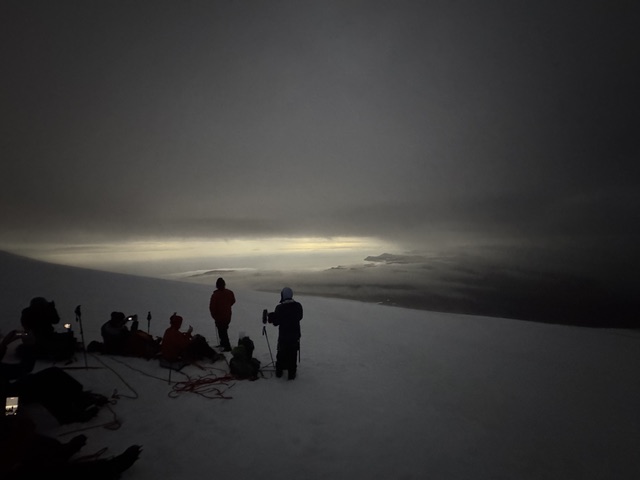
Near the summit of Snæfellsjökull, minutes before totality.
My goal was to be on top of a glacier during the eclipse. Technically, I achieved it. We were less than 100 meters from the summit when totality arrived.
The weather had other plans for anyone hoping to see the solar corona, but the clouds didn't erase the experience. The light disappeared from the landscape. Everything became eerily still. A band of light remained on the horizon, and for a few minutes we stood near the top of Snæfellsjökull in almost total darkness.
Not everyone in the group had alpine climbing experience, and we had moved more slowly than expected. We hadn't reached exactly the point we'd intended to reach, and we hadn't seen exactly what we'd hoped to see. Yet as a group, we had gotten almost to the summit, safely, in time for totality.
That distinction matters off the mountain, too. Some objectives are precise because they have to be. Others are simply markers we chose on the way to a larger outcome. The danger is treating both the same.
At my desk, I can become just as attached to a specific outcome as I can on a mountain. But when the exact target isn't essential, insisting on it can make it harder to recognize what the team has actually accomplished.
Sometimes the objective matters. Sometimes the reason behind the objective matters more.
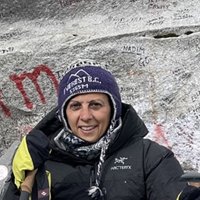
AnnMarie Castrigno trained eleven months for Everest Base Camp, then kept going. This piece was written on a fourteen-day glacier trek across Iceland, timed to a total solar eclipse. She writes here as a guest of Expedition Ready. Read her first piece, Working Out vs Training. Find her on Instagram at @acastrigno.
What would you train for?
Two minutes, a few questions, and an honest read on the gap between you and your own big one.
Get your Expedition-Ready Score